


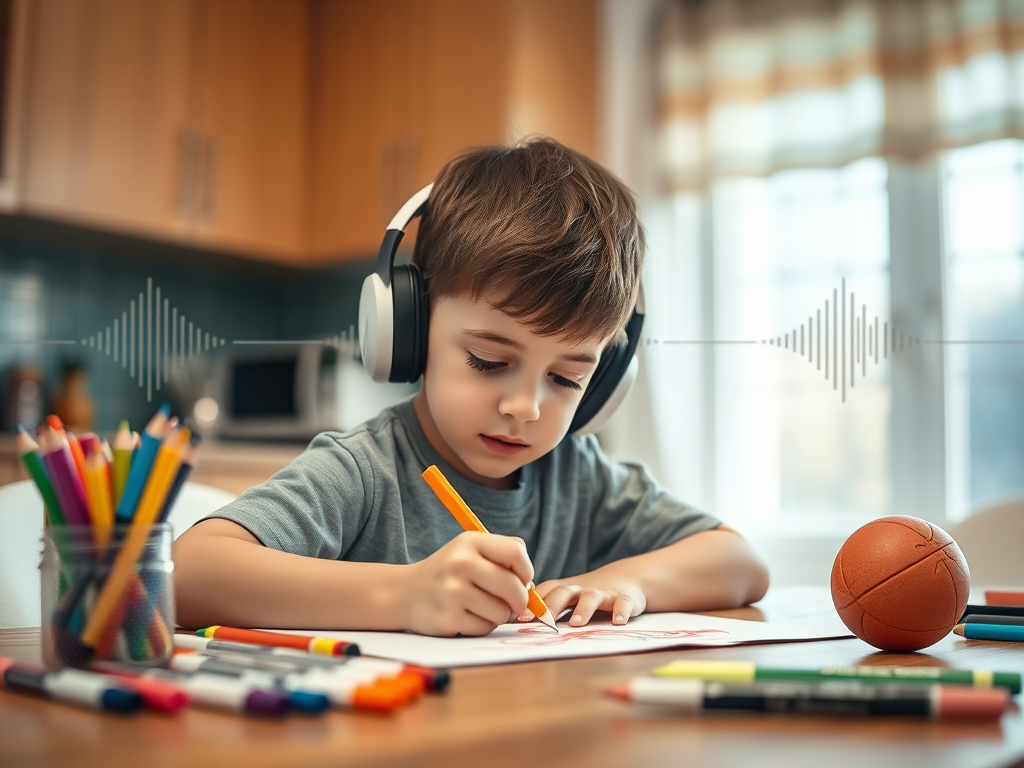
Many parents will recognize what I’m about to explain.
A particular sound startles your child. A siren, a song, a cough. You see the warning signs in your child: he stiffens, his fists clenched, his alarmed look. Your instinct is to stop the noise or remove him from the area to avoid a meltdown.
This instinct has been second nature to us for many years now. And after many meltdowns and broken devices, we tried something different. We lived in a county that had virtually zero help for kids like our son.
My observations are not advice, a cure, or a formula, but simply what happened in a controlled trial with our son and why I think it matters.
Our Son’s Diagnosis
Our son was 10 at the time we started these trials. He was diagnosed with ASD (Level 2) at the age of two, and ADHD when he was 8.
Our boy is triggered by specific sounds: sirens, children crying, applause, and the “Happy Birthday” song, to name a few. The goal of the trial was to reduce his aggression by strengthening a skill we often take for granted—the ability to ignore something.
Sometimes we used our kitchen table, sometimes we borrowed a room in our church, and sometimes we used a picnic table outside. We shared this information with our son’s teachers so they might help us attempt the same things with different people in different settings. But the data I’m sharing with you today is from my direct observation.
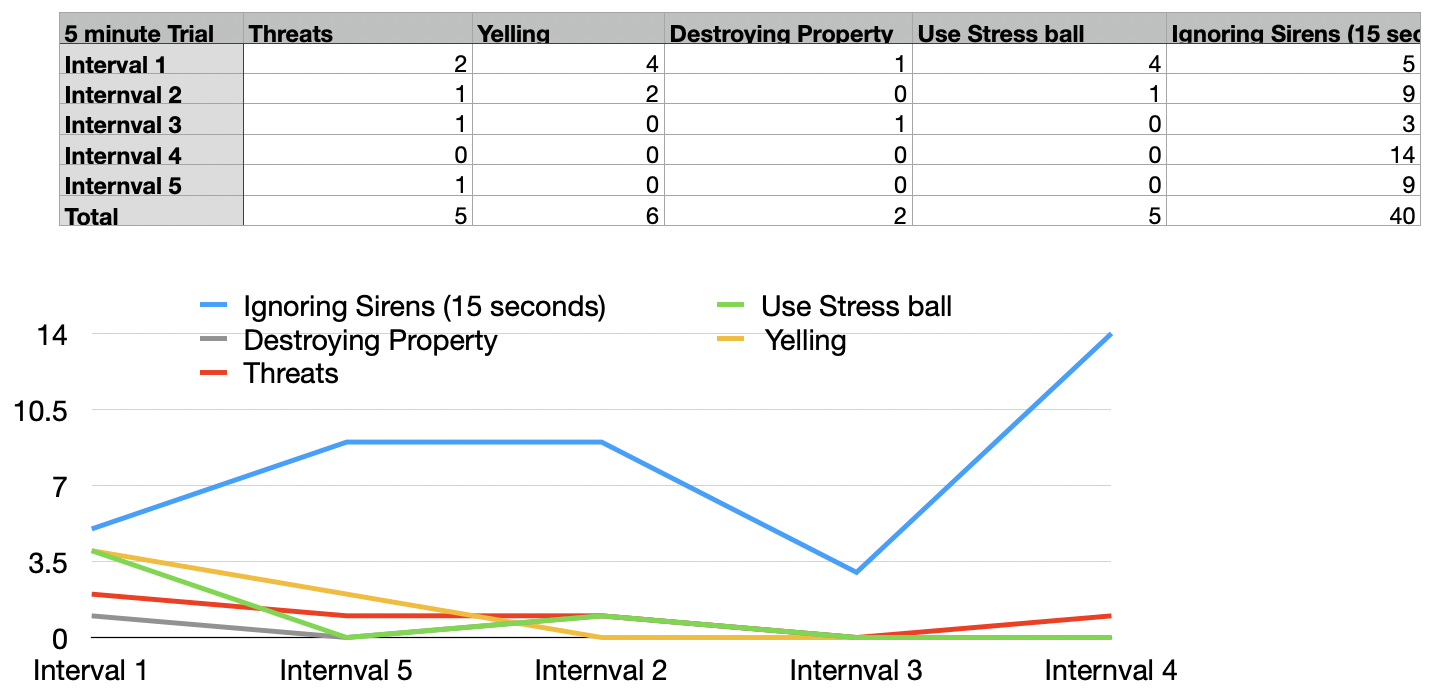
Below is the data from one trial of the ten we ran over several weeks. The trials took place during a time when our son was trying a new medication. Some of the trials occurred while he was medicated, and some were done without any medication. The entire trial was recorded for experts and doctors to review later.
What We Did
While seated at the table, our son was given paper and markers to draw. He loves to draw and is accustomed to sitting for a period of time. During this time, we played recordings of fire truck and ambulance sirens at different volumes: low, medium, and high.
These sounds triggered our son’s aggression, but we did not shut off the sound when he seemed distressed. Instead, the adults stayed calm and reinforced moments when our son could react calmly. On the table, our son had coping tools, such as earmuffs and a stress ball. Whenever our son used the coping tools or could ignore the sound completely, we praised him verbally and gave him a small treat he liked.
Verbal praise happened predictably every 15 seconds that he could ignore the sounds, and treats were given every 30 seconds of ignoring. We would say, “Good job ignoring!” or “I’m proud of you for staying calm!”
What We Observed
The earliest part of each session was the most difficult. A lot of aggressive behavior occurred, such as yelling, threatening to break the phone, and visible stress. But as the sessions progressed, our son’s tolerance grew. In many of the later sessions, our son’s aggression completely dropped—no yelling, no physical attempts to turn off the device, and no threats. Our son could spend entire sessions (five minutes) ignoring the sound entirely.
As the sessions progressed, we did not remove the trigger. We did not want to reward or reinforce his aggression by turning off the sound. We did not become angry or punish him for his distress. We did not wait for a perfect response from him in order to give praise and reinforcement.
Between intervals, he was given many breaks and time to reset, and we rewarded him more as his ability to ignore increased.
Why We Think This Helped
Again, this is only our reflection after trying this with our own son.
The most challenging moments were at the beginning, yet the sessions continued to the end. After many sessions, our son’s calm reactions were reinforced, and the data showed growth in his ability to ignore triggers. His ability to ignore increased—not by accident, but through practice. His calm responses were noticed and reinforced.
I’m certainly not claiming this works for every child. Our son is still triggered by sounds. We’re not making an argument against medication, and I’m not suggesting anyone try something like this without adequate support. This was one supervised trial with our son that did some good.
Why I’m Sharing This
I’m sharing this with the larger community because many parents don’t get to see examples like this, and I think the data might be helpful. Friends and families who want to help may not know what that actually looks like. Any friend of our family could help by being present during trials to observe and offer support and praise. Using different locations and different people may help generalize the skill a child is trying to learn.
Friends can see this and be ready to offer support. Kids deserve approaches that are safe and preserve their dignity.
I want to continue sharing what we learn and the data from similar trials in the future, including findings about what does not work as well. Even if only one family responds to say this was helpful, it will be worth it.
If you’re a parent trying to survive the moment, I hope this gives you one more option to consider.
 J. C. Walz – Faith, Fiction, and DEvotional Writing
Leave a comment