


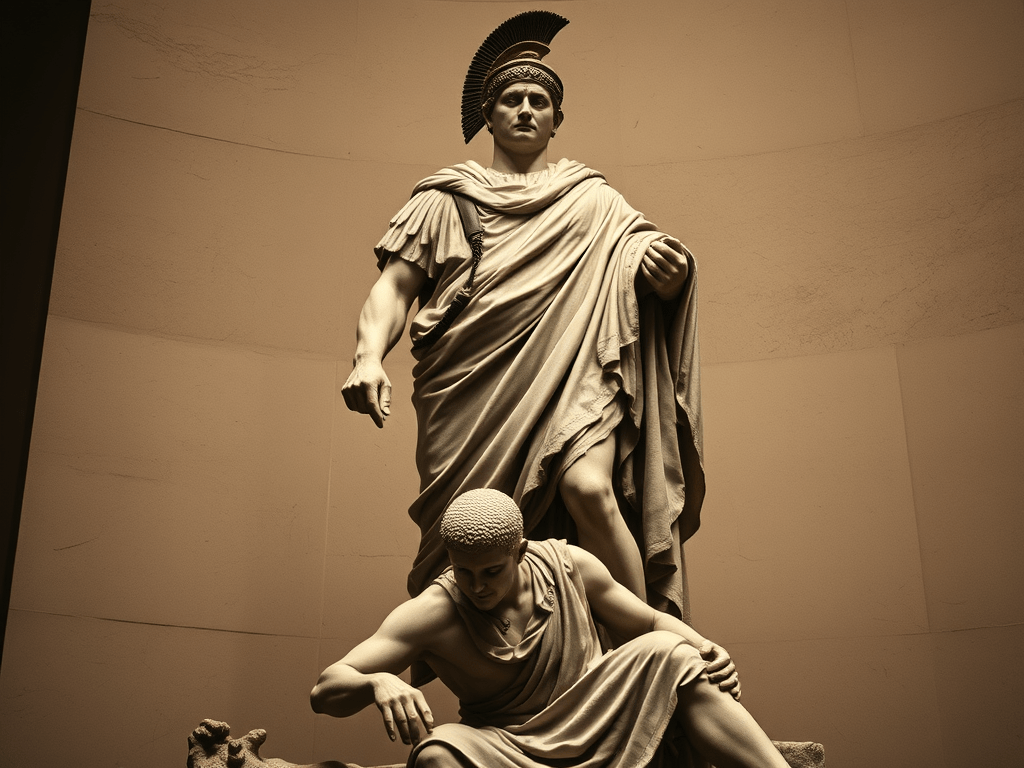
Humble yourself?
When Paul wrote to the church in Philippi, he was not speaking to a gentle or soft-hearted culture. He was speaking to a Roman colony built on military honor, public recognition, and the pursuit of status. In that world, humility was not considered a virtue. It was a word tied to weakness, defeat, and the shameful posture of a servant.
If you told a Roman soldier or government official to “humble himself,” he would have heard something very different from the Christian idea. He would have heard:
“Lower yourself. Lose your standing. Surrender your honor.”
No respectable Roman citizen would choose that path.
A Culture Built on Honor and Applause
Philippi was filled with retired soldiers who had earned the privileges of Roman citizenship. Inscriptions from the region show people proudly displaying their military achievements, donations to the city, and the praises they received from the emperor. It was their way of saying, “Here is who I am. Here is what I have done. Here is why I deserve honor.”
Into this culture, Paul wrote:
“Do nothing through strife or vainglory. In lowliness of mind let each esteem other better than themselves.” (Phil. 2:3)
To Roman ears, this was shocking.
The word Paul uses for humility, tapeinophrosynē, was not positive in their society. It referred to the low position of a servant, the humiliation of defeat, or anything considered beneath the dignity of a free and honorable Roman citizen.
Yet Paul says that this is the mind of Christ and the mindset that must shape the church.
When Honor Is Everything, Humility Sounds Like Suicide
In Roman culture, losing honor was worse than death. This same thinking shows up in modern cultures as well.
Western culture tells us to assert our rights and protect our self-image.
Eastern culture urges us to guard our reputation and avoid losing face.
Both cultures teach us the same instinct Rome taught its people:
Protect yourself. Present yourself. Promote yourself.
But the Gospel presents the opposite pattern.
Christ existed in the form of God, yet He did not cling to His rights. (Phil. 2:6)
He took upon Himself the form of a servant. (Phil. 2:7)
He humbled Himself and became obedient unto death. (Phil. 2:8)
This was not how emperors ruled. It was not how the world pursued greatness. Yet this was the path chosen by the Son of God.
True Humility Is a Revelation, Not a Personality Trait
Christian humility is not produced by a natural disposition. It is produced by seeing Christ.
If humility were merely a gentle personality, Paul would have said, “Try to be more agreeable.” Instead, he said, “Let this mind be in you, which was also in Christ Jesus.” (Phil. 2:5)
Christ redefined humility as the expression of divine love. His humility reveals the nature of God rather than a lack of strength.
What the world sees as losing, heaven recognizes as true greatness.
What the world sees as shame, God calls glory.
What the world avoids, Christ embraced for our salvation.
Why This Still Matters Today
We may not engrave our accomplishments on stone, but we display them online. We curate our image. We defend our pride. We quietly believe that losing honor is the same as losing value.
Philippians 2 confronts both Western and Eastern ideals by teaching:
- The humble are lifted up by God.
- The servant is the one God calls great.
- Those who stoop to serve look most like Christ.
Paul was not offering a moral suggestion. He was calling the church to reflect a completely different kingdom, one where honor is not seized but given by God.
A Closing Reflection
Humility was a dirty word in the Roman world, and it still makes us uncomfortable today. Yet Christianity did not spread because early believers fought for status or public recognition. It spread because ordinary men and women quietly embraced the mind of Christ in a culture that prized pride.
The same calling is ours.
“Let this mind be in you.”
This is the path to unity.
This is the path to joy.
This is the path that reflects Christ.
 J. C. Walz – Faith, Fiction, and DEvotional Writing
Leave a comment